




Email: sales@prodrill.com.cn
Tel:0086-18959243380
Addr: Room 805 C1 Wanda Plaza, No.5 Jinzhong Road, Huli District, Xiamen, China

Selection Guide for H19 *108 Tapered Drill Rods in Highly Abrasive Rock Formations of the Andes
29 Oct 2026
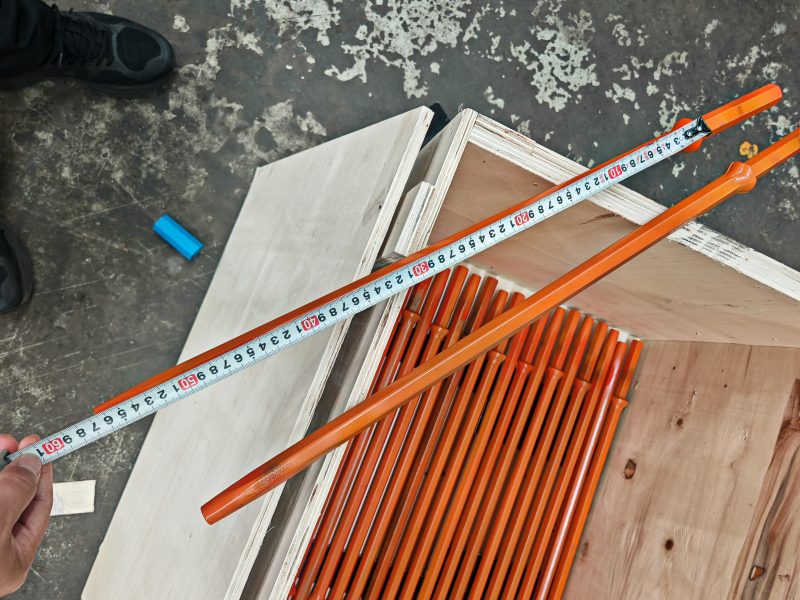
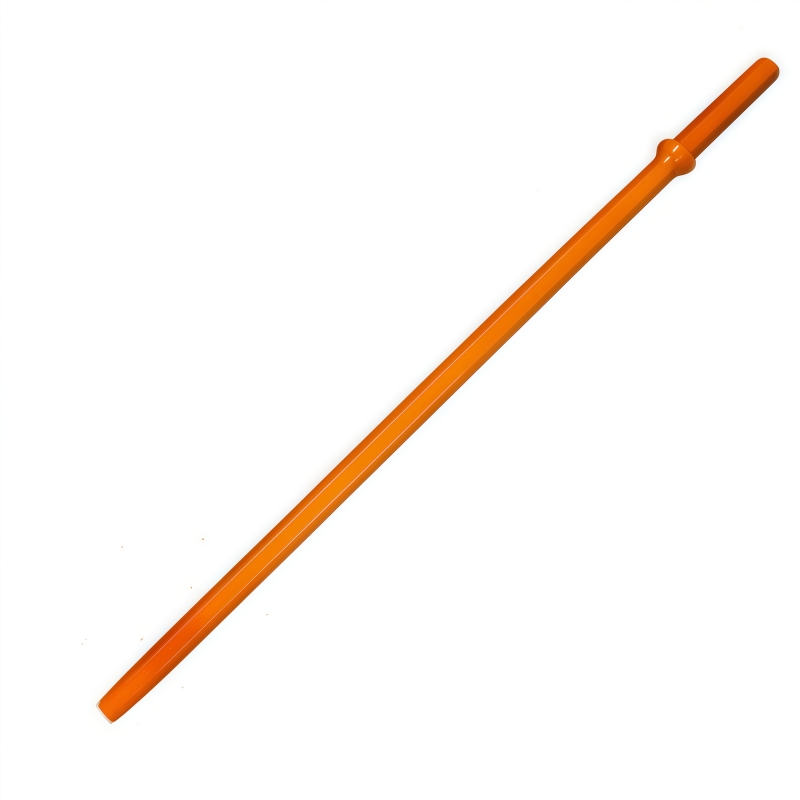
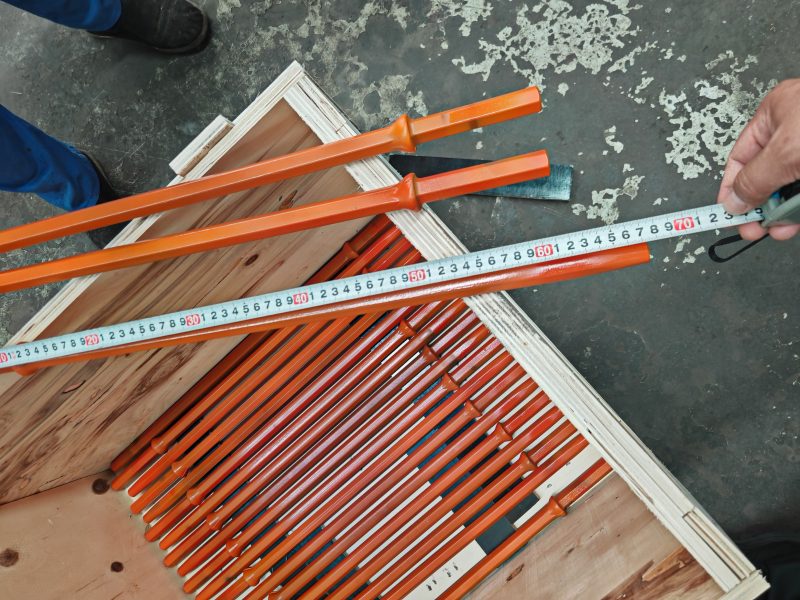
On July , a customer from Peru ordered a batch of H19*108 taper drill rods . The first batch was produced using 55SiMnMo material, but during trials, it was discovered that the drill shoulder, a high-risk area for failure, consistently experienced breakage. Later, switching to 40SiMnCrNiMo raw material successfully resolved the issue. A comparative analysis of the two materials is as follows:
Core Comparison of 40SiMnCrNiMo and 55SiMnMo
Mechanical properties and lifespan
The advantages of 40SiMnCrNiMo are very clear. Under the same working conditions, its drill rod life is about 40% longer than that of 55SiMnMo, and some data even show that its average life after the first forging can be more than twice that of 55SiMnMo drill rods. This is due to the composite addition of Cr, Ni, and Mo in its composition, which brings excellent hardenability, toughness, and fatigue resistance, making it specifically designed for heavy-duty rock drilling tools that can withstand extreme impacts and continuous operation.
55SiMnMo is a classic drill steel independently developed in my country. Its core advantage lies in its B4 type bainitic structure—after normalizing, it obtains a carbide-free structure with alternating lath ferrite and carbon-rich austenite, with a carbon-rich austenite content of 20-30%, which can effectively delay the initiation and propagation of fatigue cracks. It has a good balance of strength and toughness, but its harden ability is relatively shallow, and its elongation and reduction of area are sometimes low. When the microstructure is inhomogeneous (such as the presence of silicon-rich blocky ferrite), it is prone to brittle fracture.
Differences in upsetting and forging processes
The current state of the process, where "the chisel shoulder is formed by pressing," is crucial.
The B4 type bainitic structure of 55SiMnMo exhibits a good balance of strength and toughness even in the normalized state, with relatively moderate resistance to upsetting deformation. However, special attention needs to be paid to controlling the uniformity of the raw material's microstructure to prevent defects such as silicon-rich blocky ferrite from becoming crack initiations in the upsetting stress concentration zone.
40SiMnCrNiMo, containing Ni and Cr, exhibits higher resistance to high-temperature deformation and can withstand greater upsetting loads. However, it also responds better to heat treatment after upsetting: sub-zero normalizing at 780℃ yields a composite microstructure of lath martensite and carbon-free bainite, increasing the V-notch impact energy from 12J in the normalized state to 30J, significantly improving ductility and toughness, and resulting in finer, more uniform grains. This means that the internal stress generated during upsetting can be more effectively eliminated through subsequent heat treatment, resulting in stronger resistance to early failure at the brazing shoulder.
Within the current standard material selection range for H19/H22 tapered connector drill rods in China, 40SiMnCrNiMo is indeed the best choice in terms of overall performance. It has been included in relevant standards as one of the recommended steel grades for H19, H22, and H25 drill rods, and its hard rock service life, according to industrial statistics, consistently exceeds 100m, approaching the level of similar products from Sweden.
However, from a global perspective, the lifespan of 2708 (i.e., 40SiMnCrNiMo) drill rods produced by manufacturers such as Secoroc in Sweden is still more than twice that of domestically produced ZK55SiMnMo drill rods. The difference is not mainly in the steel composition itself, but in the consistency of the smelting and rolling process (especially the purity of the hollow steel and the quality of the inner hole) and the drill manufacturing process.
Targeted recommendations for factory processes
Your policy of using the same upsetting process for all taper drill bits' shoulders is reasonable in practice, but the following points should be noted:
1. Controlling the raw material of 55SiMnMo is the primary hurdle to achieving a high upsetting yield. Strict control of the microstructure uniformity of the hollow steel is essential to avoid silicon-rich blocky ferrite; otherwise, stress concentration during upsetting can easily induce early brittle fracture at the drill bit shoulder.
2. The heat treatment after upsetting 40SiMnCrNiMo cannot simply follow the normalizing process of 55SiMnMo. It is recommended to use sub-critical normalizing at 780℃ for upsetting 40SiMnCrNiMo parts. This is a process scheme that has been verified in the literature and can simultaneously take into account both strength and impact toughness. It has the most direct effect on extending the service life of stress concentration areas such as the drill bit shoulder.
3. Your direction of positioning 40SiMnCrNiMo as the "best material" is correct. On H19 small-gauge drill rods, the relative advantage of 40SiMnCrNiMo may not be as obvious as on larger gauge ones (small gauges have smaller cross-sectional areas, so the benefits of differences in hardenability will be reduced), but in the high-failure area of the drill shoulder, its impact fatigue resistance margin is still significantly better than that of 55SiMnMo.