




Email: sales@prodrill.com.cn
Tel:0086-18959243380
Addr: Room 805 C1 Wanda Plaza, No.5 Jinzhong Road, Huli District, Xiamen, China

China Current Status and Development Trends of Steel for Rock Drilling Tools
13 Feb 2026
Special Steel R&D and Application for Construction Machinery
Construction machinery is the cornerstone of national infrastructure construction and modernization.
With the global trend of intelligent upgrading and green manufacturing in engineering equipment, higher requirements have been put forward for the application of special steel in construction machinery.
World Metal Herald and Daye Special Steel, a subsidiary of CITIC Pacific Special Steel Group, jointly launched the "R&D and Application of Special Steel for Construction Machinery" series.
This series explores the R&D and application achievements of special steel for construction machinery in China, looks to the future, and aims to safeguard the development of major engineering equipment and support the sustainable development of the global equipment manufacturing industry.
The steel drill and tool industry is a manufacturing field with high professionalism and personalized requirements.
Steel for drilling tools is the key material foundation driving the development of products in this industry.
This article first points out that drilling tools have expanded to geotechnical drilling tools, systematically introduces their product classification, the current status and main application scenarios of steel for drilling tools, and sorts out relevant product standards. Finally, it briefly prospects the future development of steel for drilling tools.
1 Overview of Drilling Tool Products
The steel drill and tool industry has high professionalism and personalized requirements, with strict demands on raw materials, processes, heat treatment, design and manufacturing, R&D, and process management. Its products are widely used in mining, geological exploration, transportation and national defense construction, water conservancy and hydropower, construction, municipal construction, and other fields. Due to the harsh working environment, the consumption of drilling tools is relatively large, providing a stable market demand for the industry.
With the development of various construction machinery in China, such as drilling rigs, shield machines, roadheaders, highway, and construction equipment, the variety of supporting tools has become increasingly abundant, and drilling tools have gradually expanded to geotechnical drilling tools. These products not only meet the needs of domestic drilling and excavation projects but also achieve partial exports, becoming one of the rapidly developing manufacturing industries.
According to the type of construction machinery used for drilling and excavation, the supporting operating tools can be divided into three major categories:
1.1 Drill Products
Also known as top-hammer rock drilling tools, they include:
1.Tapered connection hollow hexagonal drill rods for rock drilling
2.Integral carbide drills for rock drilling
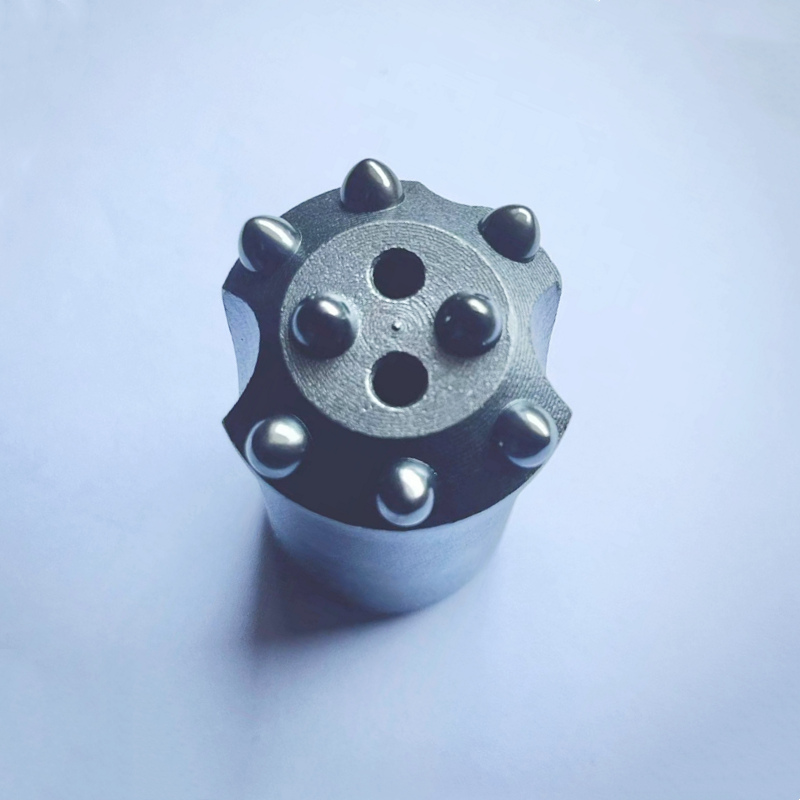
3.Tapered connection carbide drill bits (including blade and button types) for rock drilling
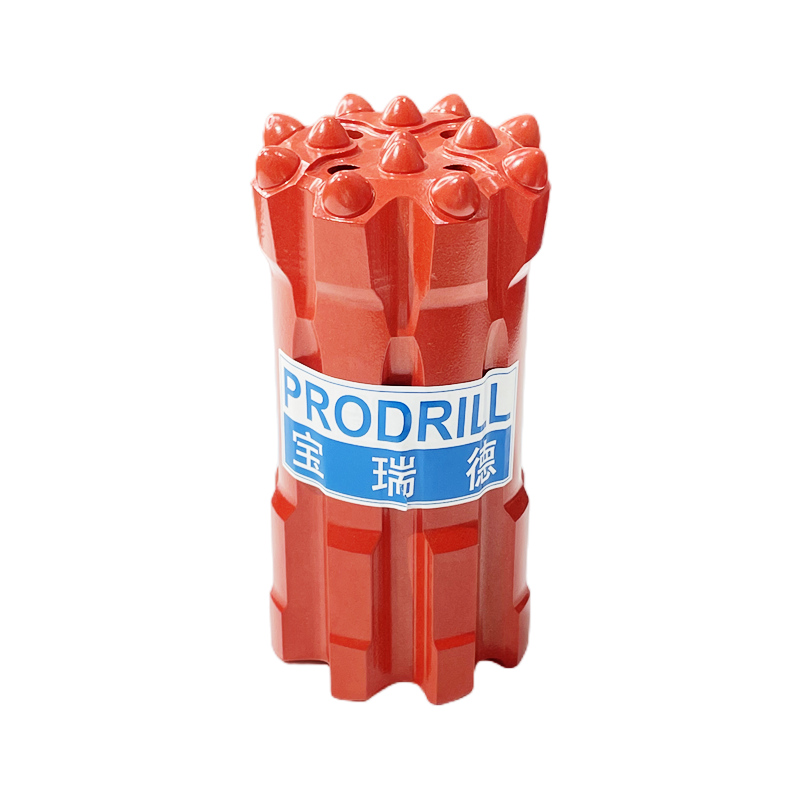
4.Threaded connection drill rods for rock drilling (including light extension drill rods and extension drill rods for hydraulic drill rigs), among which extension drill rods for hydraulic drill rigs (including extension drill rods for underground and open-pit drill rigs, quick-change drill rods, shank adapters, tubular drill rods), connection sleeves, shank adapters (for pneumatic and hydraulic rail-mounted rock drills), threaded connection drill bits (including blade and button types) for rock drilling, blast furnace opening tools (including drill rods and bits), air drills, hydraulic hammer drills, and other products.
1.2 Drilling Tool Products
Including:
1.DTH drilling tools (including hammers, bits, drill rods)
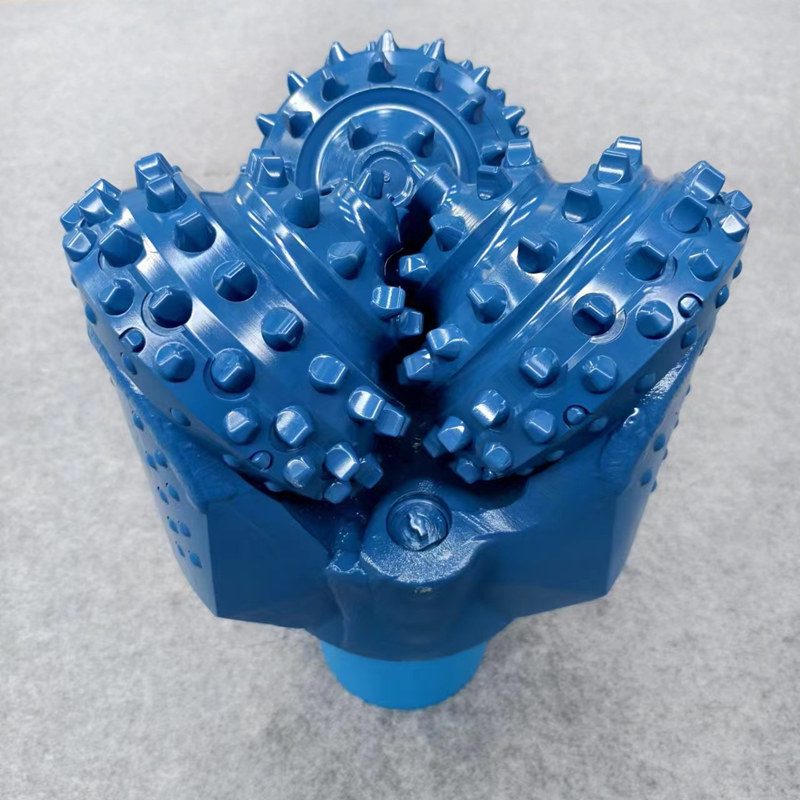
2.Mining roller cone drilling tools (including bits, drill rods)
3.Geological drilling tools (including bits, reamers, drill rods)
4.Coal mine drilling tools (including drill rods, bits, raise boring tools, anchor drilling tools, cable-through drill rods)
5.Rotary drilling tools (including buckets, sand buckets, bits, core barrels, drill rods)
6.Raise boring tools (including bits and drill rods)
7.Trenchless drilling tools (including pilot bits, back reamers, single drill rods, joints), and other products.
1.3 Engineering and Mining Cutting Tool Products
Including:
1.Picks (including coal picks, roadheader picks, engineering picks)
2.Shield machine cutting tools (including scrapers, center cutters, front cutters, profile cutters, protection cutters)
3.Full-face tunnel boring machine (TBM) cutters (center cutters, main cutters, positioning hob cutters)
4.Engineering drill cutters and tool holders, and other products.
2 Current Status and Application of Steel for Drilling Tools
2.1 Hollow Steel
Hollow steel is a special steel with a relatively complex manufacturing process and an essential raw material for producing drill rods. It has strict requirements on steel performance and quality indicators, and its quality directly affects the service life of drill rods. Strict regulations are imposed on product geometric dimensions, yield strength, tensile strength, impact toughness, surface quality, decarburization, and microstructure. For iron and steel enterprises, the market demand is relatively small. Except for Shougang Guigang, domestic special steel companies usually do not produce hollow steel; instead, drill steel manufacturers purchase steel from special steel enterprises to roll various types of hollow steel.
Hollow steel is mostly produced using two rolling processes:
1.Mechanical drilling with core hot rolling method: Raw materials are billets, which are drilled with core holes and rolled with core rods.
2.Hot piercing with core reduction-hot rolling (hot drawing) method: Raw materials are round steel bars, which can be rolled into hexagonal and circular hollow steel products.
In the early days, based on China's resource situation, silicon-manganese-molybdenum alloy hollow steels such as 55SiMnMo, 35SiMnMoV, and 40MnMoV were developed, along with new hollow steel production processes. Subsequently, steel grades such as 40SiMnCrMoV and 22Si2MnCrNi2Mo were designed. Recently, research has been conducted on the cleanliness, inclusions, and heat treatment of 23NiMo drill steel.
2.2 Top-Hammer Rock Drilling Tools
Top-hammer impact rock drills are located at the top of the drilling tool. The impact piston directly strikes the shank adapter, and the impact energy generated by the piston propagates in the rod body in the form of stress waves, which does work on the object to be drilled through the bit or the end of the rod body, converting impact energy into crushing energy. These tools are mainly used in mining and tunnel excavation.
Tapered connection hollow hexagonal drill rods: Suitable for hand-held or air-supported leg-type pneumatic rock drills, electric rock drills, and internal combustion rock drills, and are widely used in China and some developing countries. In recent years, through R&D and testing on steel grade development, failure mechanisms, material and rolling processes, and their impact on fatigue life, and working stress load spectra, product quality has been significantly improved. They are usually produced from hollow steel grades such as 55SiMnMo, 40SiMnCrNiMo, 95CrMo, and 23CrNi3Mo. Although these rock drilling equipment are light in weight and easy to transport, the drilling conditions are harsh, and the labor intensity of workers is high. In developed countries, they are only used for auxiliary and sporadic drilling operations. In China, due to their low equipment cost, simple operation, and convenient maintenance, they will still be used for a long time, but production and usage will gradually decrease.
Threaded connection drill rods (heavy-duty drilling tools): The shank adapter connects the sleeve, drill rod, and bit into a slender rod. Under the high-frequency and large impact energy torque thrust of the rock drill, they must withstand multiple composite stresses such as tension, compression, torsion, and bending, and suffer from abrasion and corrosion by media such as rock, rock powder, and mine water in a rotating and colliding environment. The stress value fluctuates greatly with drilling conditions, making them the most demanding and easily damaged components in hydraulic drill rig tools. They are mainly manufactured from hollow steel grades such as 35SiMnMoV, 20CrMnTi, and 23CrNi3Mo.
The early failure of drilling tools not only affects production and endangers operator safety but also reduces drilling efficiency, increases mining costs, and wastes high-quality steel. China has carried out extensive R&D work on steel grade development, rolling, heat treatment, rough machining, friction welding, thread processing, and mechanical analysis such as energy transfer and matching of heavy-duty drilling tools, narrowing the gap with foreign high-end products. Domestic heavy-duty drilling tools have become the leading products, laying the foundation for replacing imports and promoting the industrialization of drilling tools.
Hammer drills: Tools used with hydraulic breakers, which can be installed on excavators, scaling rigs, and ore pass crushers in mines, mainly used for building demolition and ground, rock, and ore crushing. Hammer drills operate under complex and variable stress conditions, bearing not only axial tension and compression stresses from the impact of the hydraulic breaker piston but also bending stresses from prying, pushing, and topping during operation, as well as wear and high-temperature softening from the object being crushed. Therefore, sufficient strength and toughness are required, and they are generally produced from steel grades such as 42Cr, 42CrMo, and 23CrNi3Mo.
Hammer drills are core components of hydraulic breakers, directly transmitting piston impact energy (up to tens of thousands of joules) to the object being crushed. Currently, hydraulic breakers and hammer drills have formed a series of products that can fully match the size specifications of hydraulic excavators. China has conducted extensive research on hydraulic breakers, but less on hammer drills, especially in the study of fatigue strength and service life of hammer drills.
2.3 Drilling Tools
DTH Drilling Tools
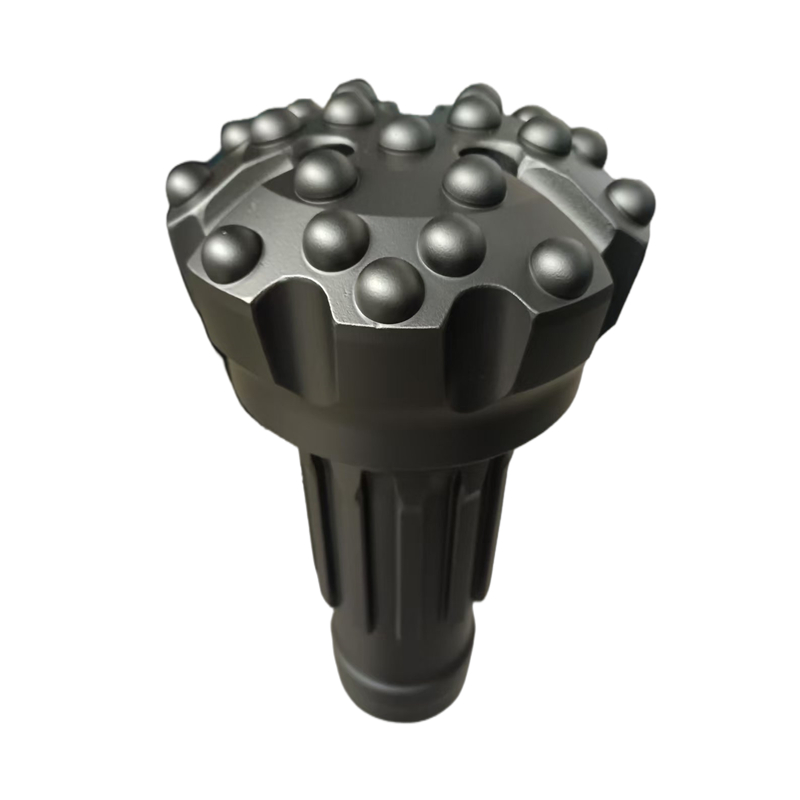
Composed of a hammer, bit, and drill rod, the rotary mechanism of the drill rig drives the DTH drilling tool to rotate, and the DTH hammer dives into the hole to directly impact the bit for rock drilling. High-pressure DTH hammers are usually composed of front and rear joints, inner cylinders, outer cylinders, pistons, check valves, etc. Except for seals, parts are basically processed from alloy steel bars, forgings, and seamless steel pipes. The main steel grades for each component are: front and rear joints: 35CrMo, 20CrMnMo; inner cylinder: 2CrMo; outer cylinder: 42CrMo; piston: 2Ni4Mo, 2CrNiMo.
DTH bits operate under complex stress conditions and have strict processing requirements due to direct piston impact. The bit body is made of materials such as 18-25CrNi5Mo, 22-25CrMnSiNi2Mo, 20CrNi4Mo, 24SiMnNi2CrMo, and 20Ni4Mo.
DTH drill rods consist of end joints and a rod body, processed from bars and pipes by friction welding. The main steel grade for joints is 42CrMo, and the rod body is produced from seamless steel pipes for drilling such as ZT380 (DZ40), ZT490 (DZ50), and ZT590 (DZ60).
The processing methods for main drill rods such as roller cone, geological, rotary drilling, raise boring, and trenchless drill rods are basically the same as those for DTH drill rods, with differences in materials, mostly using 36Mn2V, 40Cr, 30CrMo, 35CrMo, 42CrMo, etc.
Recently, researchers have carried out extensive research and testing on dynamic process modeling and computer simulation of DTH hammers, the influence of structure on impact performance parameters, parameter optimization design, stress wave propagation and energy transfer characteristics of the drilling system, force analysis of pistons and bits, and optimal matching of the drilling system, bringing China's DTH drilling tools to an internationally advanced level.
Roller Cone Bits
They break rock by the axial force and rotational torque applied to the bit by the rotary and pressurization mechanism of the drill rig. The rotation of the bit drives the roller cone to roll, and under the static axial load and dynamic load during roller cone rotation, the rock is broken through crushing, impact, shearing, and scraping.
The roller cone part of the single roller cone bit (blade) has the same structure as that of the three roller cone bit. A straight shank welded or detachable structure is added to the blade, which can be installed on large-diameter rotary drilling roller cone combination bits or form trenchless roller cone reamer products. With the rapid development of large-diameter pile holes and trenchless engineering construction, single roller cone bits have become one of the main consumable tools in geotechnical mining engineering construction. The main steel grades for the roller cone bit body are 15-20Ni4Mo, 24SiMnNi2CrMo, 15MnNiMo, etc.
China has carried out extensive R&D and testing on steel development for roller cone bits, rolling, structural design and heat treatment, thread processing, wear failure, roller cone body erosion failure analysis, and dynamic characteristics. Studies have found that the torsional vibration generated by the interaction between three roller cone bit drilling and rock has obvious nonlinearity and randomness, accompanied by a "jump" phenomenon (high-frequency torsional oscillation impact), which applies impact loads to three roller cone drilling tools, causing fatigue fracture of drilling tools and chipping of bit teeth. Geological, coal mine deep-hole, and trenchless directional drilling tools are all subject to such impact loads.
Other Drilling Tools
Geological bits: Important tools in geological exploration and engineering construction, integrating various advanced technologies and playing a key role in resource development and infrastructure construction. The bit body is made of steel grades such as 35CrMo and 42CrMo.
Rotary drilling tools for coal mine anchor drilling rigs: Including drill rods and bits. The part of the drill rod connected to the rig has a sealing ring, and the other end has a common thread connected to the bit. They are usually processed from B19 hollow steel, with materials such as 65Si2Mn and 55MnMo; the bit body is processed from 40Cr or 42CrMo bars or forgings.
Cable-through drill rods (directional drill rods): Mainly used for coal mine geological water control, geological exploration, and trenchless horizontal directional drilling. The supporting non-magnetic drill rods have built-in sensors (measuring the inclination angle, face angle, and temperature of the bit), and there are cables inside the directional drill rods for transmitting these signals. The non-magnetic drill rods are located behind the pilot bit and are made of non-magnetic materials (such as stainless steel).
China has continuously paid attention to the development trends of geotechnical drilling construction methods and equipment. The Air-lift Reverse Circulation Drilling Regulations standard issued in 2020 and the Engineering Geological Drilling Regulations standard revised in 2023 (adding content on directional drilling) have both promoted the rapid development of reverse circulation DTH drilling tools and directional drilling tool products. The increase in the applicable rock formation coefficient of coal mine roadheaders has led to a sharp decline in the usage of coal mine hydraulic rock drilling rigs, and the usage of related threaded connection drilling tools has also decreased, while the usage of picks for coal mine roadheaders has increased significantly.
2.4 Engineering and Mining Cutting Tools
Picks
Widely used in coal mining, roadway, tunnel, and ground trenching construction projects, they are mainly used with shearers, roadheaders, milling machines, rotary drilling rigs (core barrels), and other equipment as tools for cutting coal and rock. Picks operate in harsh environments, subject to strong alternating impacts, and wear out extremely quickly, making them key consumables that require regular replacement.
Domestic picks use the same materials as foreign products, with little gap in wear resistance and impact resistance compared to imported picks, and a complete range of varieties and specifications. Picks are made by welding a steel body and a carbide tooth. The steel body is processed from forgings such as 35MnB, 35CrMnSi, and 42CrMo.
Shield Machine Cutting Tools
Core components of shield machine tunneling, installed on the shield machine cutter head, directly acting on earth and rock layers during construction to cut soft rock and mixed soil layers, mainly used in underground shield construction for subways, infrastructure, transportation, and other projects.
Shield machine cutting tools are divided into scrapers, center cutters, front cutters, profile cutters, protection cutters, etc., usually made by welding a tool body and a carbide head. The tool body is processed from materials such as 37CrNi3, 9Cr2Mo, 7Cr7Mo2V2Si, 4Cr5MoSiV1 (H13), and 42CrMo.
Full-Face Tunnel Boring Machine (TBM) Hob Cutters
TBMs are widely used in various tunnels, mine roadways, and other projects. Their working parts are equipped with cutting discs, on which different types of hob cutters such as center hob cutters, main hob cutters, and positioning hob cutters are installed. These are core tools for correct positioning and rock breaking during TBM operation. The cutter ring is the most important part of the hob cutter, usually processed from materials such as 5Cr5MoSiV1 and CrMo2SiV.
China has made breakthroughs in steel structure, defects and performance technology, material failure and protection (including corrosion, wear, aging, fracture, and their control) technology, and effective guarantee of manufacturing processes and equipment, laying the foundation for the industrialization of domestic TBM hob cutters and shield machine cutting tools.
2.5 Applications in Major National Projects
The "Eight-Character Policy" proposed by the Ministry of Science and Technology of China during the "Ninth Five-Year Plan" period—"Heaven, Earth, Sea, and Pole"—is all related to drilling tools, such as the Chang'e Project, the International Deep Sea Drilling Project, the International Ocean Drilling Project, the Chinese Continental Scientific Drilling Project, and Polar Drilling.
At present, the construction of each section of the Sichuan-Tibet Railway is progressing simultaneously, and the Yarlung Zangbo River downstream hydropower project has started. This project plans to develop water through tunnel diversion. Both projects are major national infrastructure construction projects promoted on the Qinghai-Tibet Plateau and require a large number of drilling tool products.
China's full-face tunnel boring machines (including shield machines) target the urgent demand for high-performance domestic equipment in major strategic projects such as urban subways, railways, mines, water conservancy, and highways, and have developed a series of high-tech products that fill gaps at home and abroad or have a leading domestic market share. TBM hob cutters and shield machine cutting tools have also achieved synchronous development.
Facing the strategic emerging industries and the major national strategic needs of high-end equipment, China has relied on national industrial policies and special scientific and technological projects to build a "demand-driven—theory-guided—technical research—application verification" whole-chain R&D system. It has achieved domestic substitution of steel for core components in multiple fields, significantly improving the reliability and competitiveness of major equipment.
Core Contribution of Daye Special Steel: Most of the steel for drilling tools, drilling rigs, and cutting tools is provided by Daye Special Steel Co., Ltd. Its "Research and Development of Special Steel for High-End Deep Well Drilling Tools" won the second prize of the National Science and Technology Progress Award, and "Development and Application of Key Functional Component Steel for New Type of Excavation Machinery" won the third prize of the Hubei Provincial Science and Technology Progress Award.
With advanced production processes, a strict quality control system, and continuous innovation by a high-quality technical R&D team, Daye Special Steel has achieved a balance of high strength, high toughness, and high wear resistance of steel through precise alloy design and microstructure regulation. Relying on precise chemical composition control, clean steel smelting technology, uniformity control, grain refinement, and full-process quality control, it ensures that drilling tools do not fail prematurely under complex stress conditions.
At present, Daye Special Steel's steel for drilling tools has a domestic market share of over 50%, maintaining a leading position. Its product performance has reached the international advanced level, successfully replacing imports. It has established long-term strategic cooperative relationships with large enterprises such as Atlas Copco, Sandvik, Boart Longyear, Shougang Guigang, and Suzhou Xinrui, and its products are exported to overseas markets such as Southeast Asia, Africa, and South America, providing important support for industry development and major national engineering construction.
2.6 Standards for Steel for Drilling Tools
The national standardization work reform plan clearly proposes to cultivate and develop group standards. In standard management, there is no administrative license for group standards, which are independently formulated and issued by social organizations and industrial technology alliances. It is necessary to formulate group standards for steel for drilling tools that meet market and innovation needs, focus on new technologies, fill standard gaps, and promote the improvement of product quality and industry development of steel for drilling tools in China.
By querying the released current standards for steel for drilling tools through the National Standard Information Public Service Platform, the following list of product standards for steel for drilling tools has been sorted out:
3 Development Suggestions and Trends
3.1 Development Suggestions
1.Steel enterprises for drilling tools should continue to conduct research on smelting, rolling, chemical composition control, purity, decarburization layer, microstructure, and mechanical properties. Develop or upgrade steel for drilling tools based on the stress, operating conditions, and fracture mechanism of products. For mainstream steel grades such as 42CrMo and 20CrNi4Mo, carry out collaborative optimization in terms of strength, toughness, corrosion resistance, and fatigue performance.
2.Pay close attention to national policies and the development trends of drilling tool products, actively adopt suggestions from drilling tool practitioners on steel use, and provide users with products with excellent performance and stable reliability.
3.Strengthen systematic research on the fatigue strength and service life of hammer drills, select materials and heat treatment processes with high fatigue strength, and improve product reliability. Although the production capacity of hydraulic breakers has temporarily decreased due to the impact of the real estate industry in recent years, hammer drills are still indispensable crushing tools in the engineering and mining industries.
4.Focus on experimental analysis of drilling tool fatigue, energy transfer of the DTH drilling system (short rod collision), stress wave propagation speed in drill rods of different materials (related to elastic modulus and carbon content), energy transfer efficiency of drill rod joints, working stress load spectra of drill rods, and wear of bits and cutting tools. Apply the analysis results to product fatigue life prediction to guide the selection of drill steel grades and the formulation of production processes.
5.While stabilizing the domestic market, actively expand emerging markets such as the "Belt and Road Initiative", participate in the formulation of international standards to enhance industry discourse, promote the agglomeration of advantageous production capacity in high-end fields, and form leading enterprises in the industry.
3.2 Development Trends
China's "15th Five-Year Plan" period will be a critical stage for the steel drill and tool industry to achieve transformation from large to strong. Industry development has been closely linked to the rise of the national high-end manufacturing industry. The core development idea is to adhere to innovation-driven development, take "specialized, refined, distinctive, and innovative" as the path, and comprehensively meet the needs of high-end drilling tool manufacturing and enhance international competitiveness by tackling key materials, building green and intelligent benchmarks, and optimizing the industrial ecosystem.
1.Improvement of quality and added value: The focus of steel for drilling tools development has shifted from "quantity" to "quality", concentrating on high value-added and high-performance materials, and focusing on the material needs of high-end drilling tool manufacturing.
2.Intelligent empowerment: Promote the deep integration of intelligent technology and production processes, build "lighthouse factories", realize the digitalization of the entire chain of steel for drilling tools production, and improve production efficiency and product quality stability.
3.Green and low-carbon development: Facing the global "dual carbon" goal and resource constraints, vigorously develop ecological design oriented to life cycle assessment, promote short-flow processes, efficient utilization of scrap steel, green metallurgy, and other low-carbon smelting technologies; actively develop new steel grades with low alloying, low cost, and long service life to reduce dependence on scarce alloy elements.