




Email: sales@prodrill.com.cn
Tel:0086-18959243380
Addr: Room 805 C1 Wanda Plaza, No.5 Jinzhong Road, Huli District, Xiamen, China

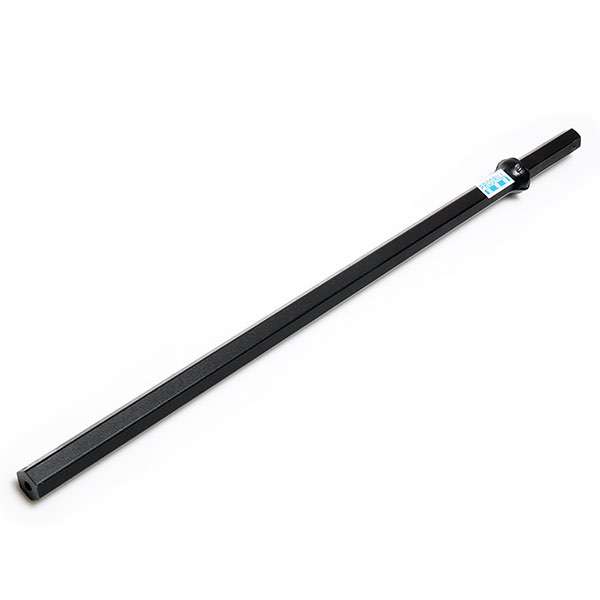
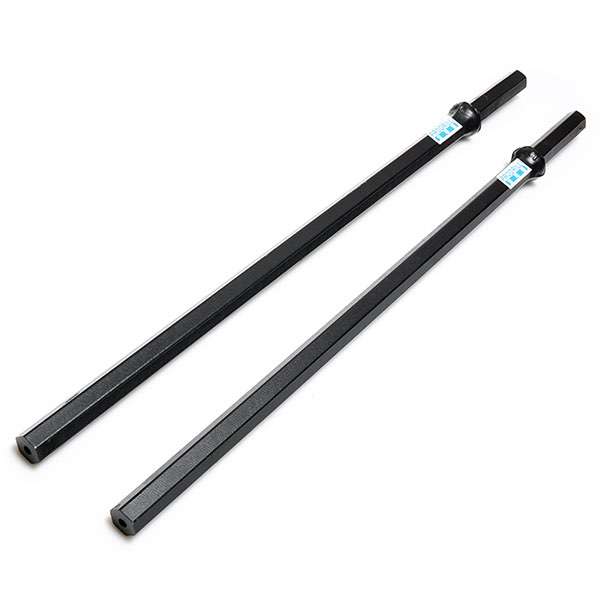
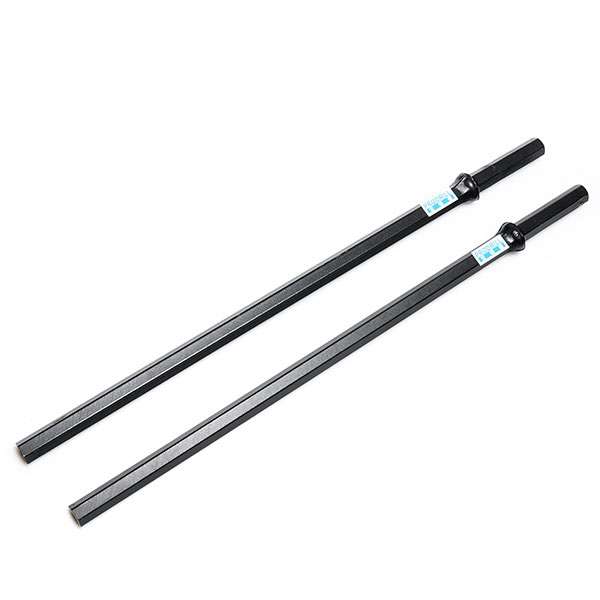
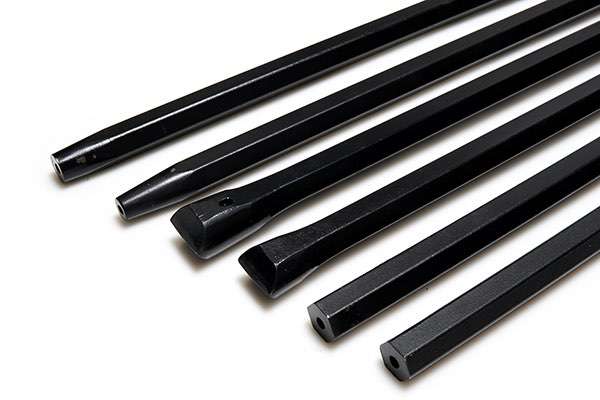
Hollow Hexagonal Drill Steel
Hollow hexagonal steel is the raw material for rock drilling rods, and its rolling process directly affects the quality and service life of the rod. Domestically, the hot-drilling-through method has long been used for producing H19, H22, H25 drill rods with hollow steel.
In recent years, domestic institutions have developed two new processes: hot-rolling with drilled core and hot-drilling-through. This paper compares the macroscopic and microscopic quality of hollow steel produced using these three rolling processes and conducts industrial evaluation tests to study the impact of rolling processes on the service life of H22-40SiMnCrNiMo hollow hexagonal drill rods.
1.Three hollow steel rolling processes
(1) Drilled core hot rolling method: First, a through hole is drilled in a solid steel billet using a deep hole drilling machine, and then the core rod is hot rolled into shape. The inner hole is machined by mechanical cutting, resulting in good surface quality and eliminating defects such as tearing and scratches caused by hot piercing. The disadvantages are low material utilization, high processing cost, and low production efficiency.
(2) Hot piercing-hot drawing method: After the steel billet is heated, it is pierced by a Mannesmann piercing mill to obtain a hollow billet, which is then hot drawn to reduce the diameter. This process has high production efficiency and high yield, and is the mainstream production process for H22 hexagonal hollow steel in China. However, the piercing process will produce defects such as tearing and micro-cracks on the inner wall, which will become fatigue crack sources.
(3) Hot piercing-hot rolling method: The steel billet is heated and pierced by skew rolling, and the hollow billet is formed by core-strip hot rolling to reduce the diameter. Compared with hot drawing, hot rolling deformation is more uniform and the metal structure has better continuity.
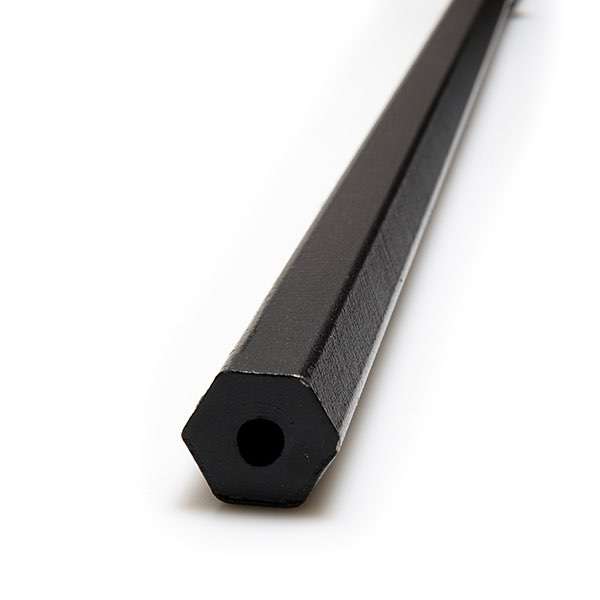
2.Comparison of surface quality of hollow steel
Hollow steel with drilled core hot rolling: smooth inner hole wall, no tearing or folding defects, and high dimensional accuracy of the inner hole.
Hot piercing-hot drawing and hot piercing-hot rolling: The inner hole has varying degrees of tearing, scratches, and oxidation defects. The inner hole quality of hot piercing-hot rolling is slightly better than that of hot piercing-hot drawing.
3.Industrial testing
Using the same 40SiMnCrNiMo steel billet, H22 hexagonal hollow steel was prepared using three different processes, and the subsequent heat treatment process was unified. A rock drilling industrial life test was carried out at the mine site.
Test results: Drilled cored hot-rolled drill rods had the highest average lifespan; the average lifespans of drill rods produced by hot-piercing-hot-drawing and hot-piercing-hot-rolling processes were roughly the same. In terms of failure modes, hot-piercing-hot-drawing drill rods mostly experienced early fatigue fractures originating from the inner bore; hot-piercing-hot-rolled drill rods had a more uniform microstructure, a longer ultimate lifespan, and greater potential for subsequent process optimization and improvement.
4.In conclusion
(1) Hollow steel produced by the hot rolling method with drilled core has no original perforation defects in the inner hole and the best fatigue life of the drill rod;
(2) The average lifespan of the finished drill rods produced by the hot-pull-hot-drawing and hot-pull-hot-rolling processes is basically the same.
(3) The hot-pull-hot-rolling process results in more uniform plastic deformation of the metal and has the potential to improve the microstructure and extend the ultimate life of the drill rod compared to the hot-pull-hot-drawing method.
PIs fill into the form below and we will contact you immediately