




Email: sales@prodrill.com.cn
Tel:0086-18959243380
Addr: Room 805 C1 Wanda Plaza, No.5 Jinzhong Road, Huli District, Xiamen, China

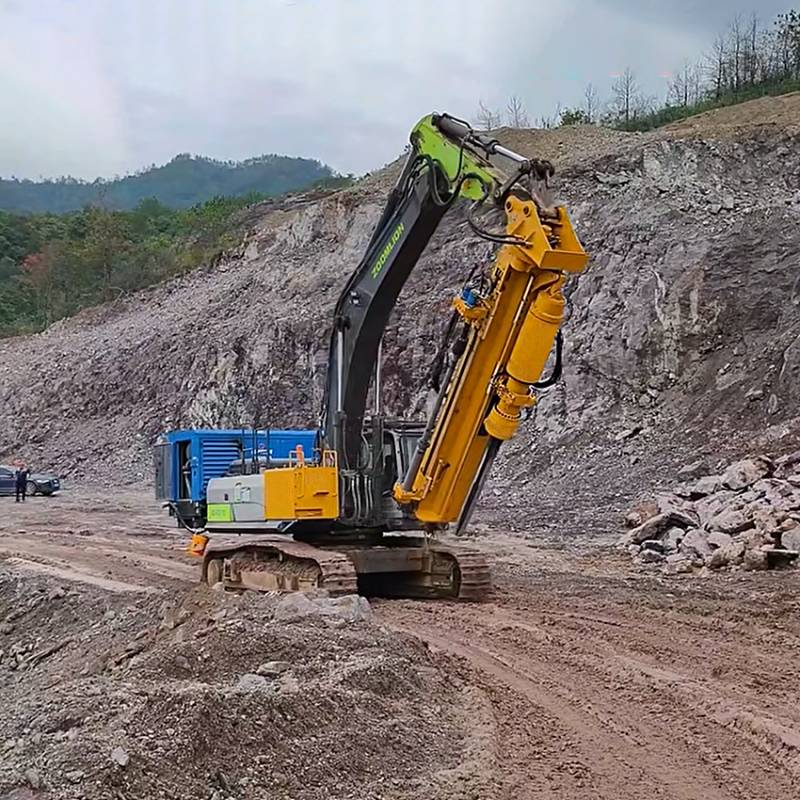
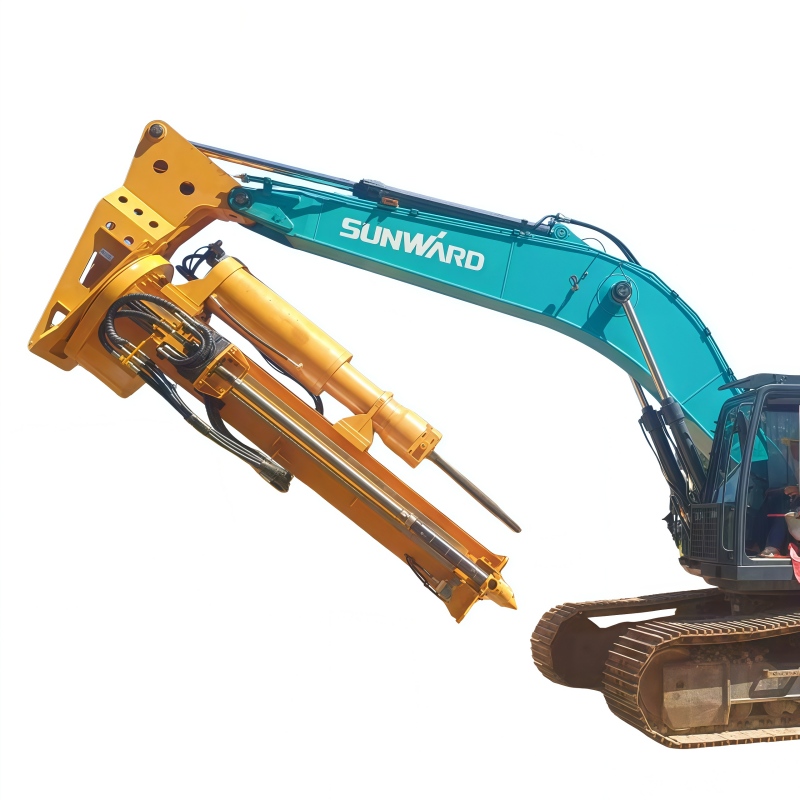
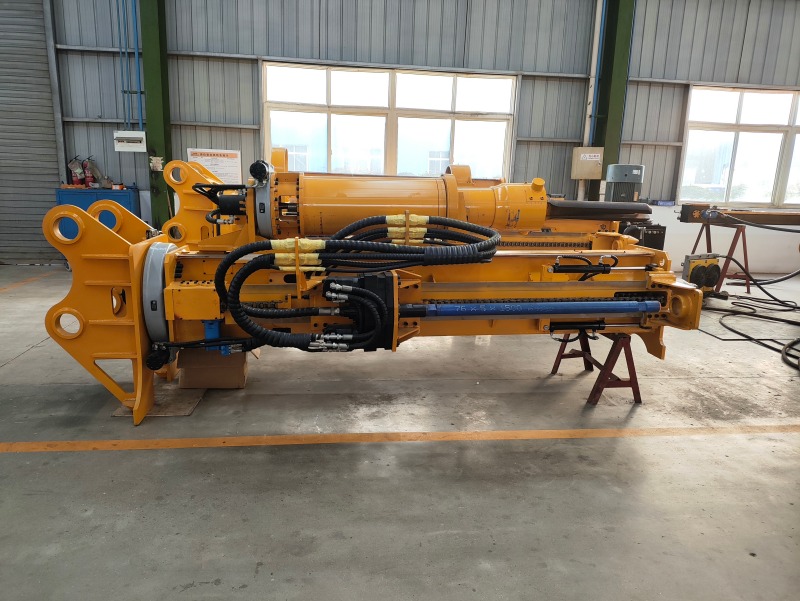
PD-130 DTH Integral Drilling and Splitting Machine
- Dimensions(mm) : 4500*1550*1600
- Weight(kg) : 4450
- Drill Hole Diameter(mm) : 130
- Drill Hole Depth(mm) : 1500
- Diesel Engine Power(kw) : 162
- Maximum Working Flow Rate(L/min) : 260
- Applicable Excavator Specifcation(t) : ≥20
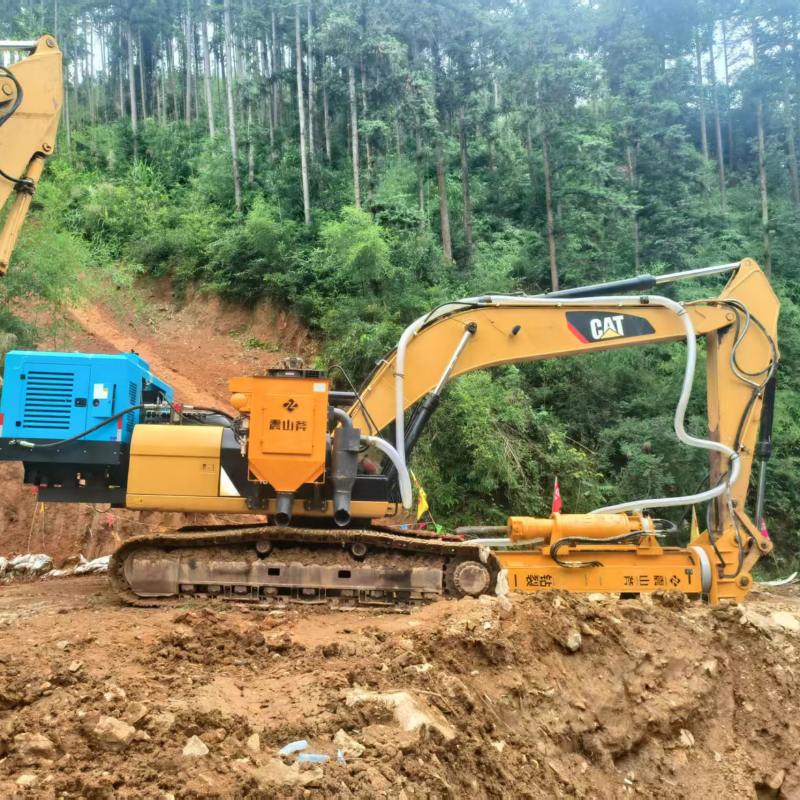
PD130 DTH Integral drilling and splitting machine, is a hydraulic system that utilizes the excavator's own hydraulic system. Through modification, the hydraulic source of the excavator is used to achieve full hydraulic rock drilling, drilling, and splitting work without damaging the original working performance of the excavator.
PD130 DTH Integral drilling and splitting machine, is economical, practical, easy to install, and suitable for drilling and splitting. There are many advantages such as flexible splitting, convenience, and speed.
At the same time, it enables the excavator to achieve multi-purpose functions, greatly increasing the range of use of the excavator and improving its efficiency.
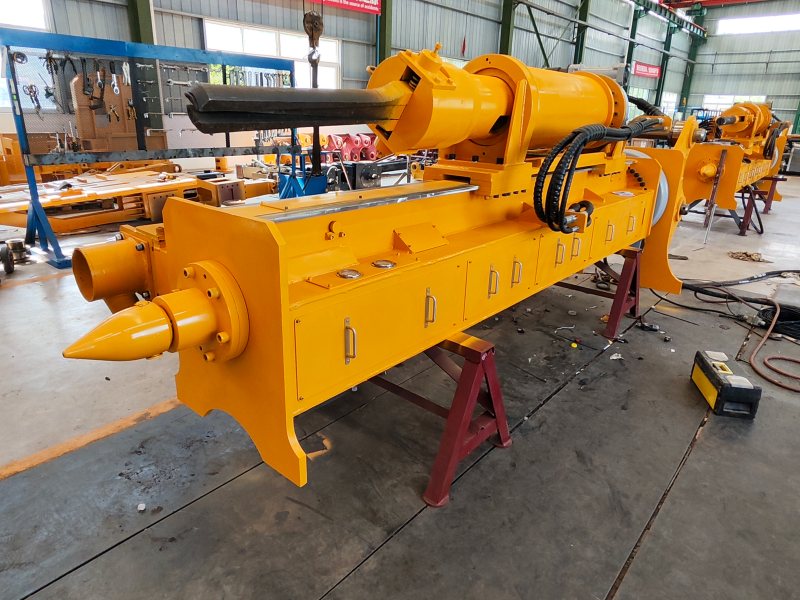
Drilling Rig Working Principle
The drilling process consists of three parts: impact (percussion) , rotation, and slag removal. First, the drill bit impacts and breaks up the rock. Simultaneously, the drill bit rotates to break up the broken rock, and air pressure blows the debris out of the hole. All drilling rigs rely on these three parts.
In hydraulic tophammer drills, the impact and rotation components are located at the top of the drill rod, hence the name "top-hammer hydraulic rock drill." The impact power head transmits the impact kinetic energy to the drill bit through the drill rod. Because the drill rod needs to transmit kinetic energy, its diameter is relatively small.
The hydraulic drills used in integrated drilling and fracturing machines typically require high-power hydraulic rock drills with a power of 22KW or more to drill 115mm holes.
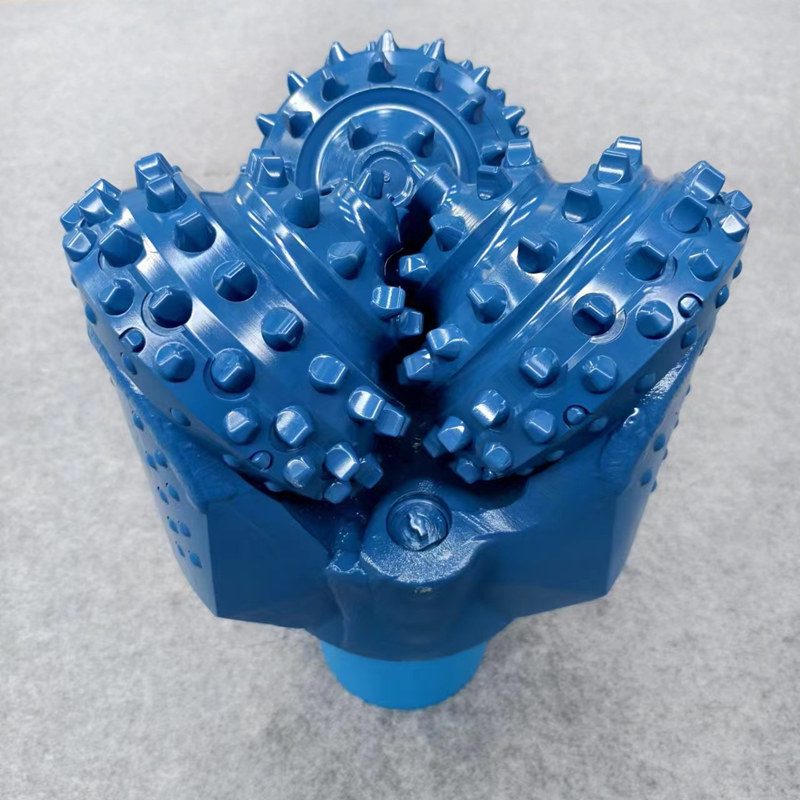
Down-the-hole (DTH) drills, on the other hand, have an DTH Hammer at the bottom and no sprocket accessory. The drill rod does not need to transmit power, so its diameter is very large, and its lifespan is measured in years. Therefore, the only daily consumable for DTH drills is the drill bit.
| PD130 Technical Data Sheet | |||
| 1 | Length * Width * Height | mm | 4500x1550x1600 |
| 2 | Weight | kg | 4450 |
| 3 | Rock Drilling Mode | / | DTH Drill |
| 4 | Impact Mode | / | Pneumatic Type |
| 5 | Drill Hole Diameter | mm | 130 |
| 6 | Drill Hole Depth | mm | 1500 |
| 7 | Impact Hammer | / | 4 inches |
| 8 | Rotation Pressure | Bar | 180 |
| 9 | Rotation Torque | N.m | 3800 |
| 10 | Rotation Speed | Rpm | 0-150 |
| 11 | Maximum Working Flow Rate | L/min | 260 |
| 12 | Splitting Machine | / | ANZP320 |
| 13 | Cylinder Diameter | mm | 320 |
| 14 | Splitting Pressure | Bar | ≤315 |
| 15 | Expanding Force | t | 5000 |
| 16 | Control System | / | Electro-Hydraulic Proportional Valve +Wireless Remote Control |
| 17 | Dust Collector System | / | Dry/wet |
| 18 | Diesel-Powered ScrewAir Compressor | / | 162SCYT-15-18G |
| 19 | Diesel Engine Power | KW | 162 |
| 20 | Air Displacement | m³/min | 17-20 |
| 21 | Air Pressure | Bar | 18-15 |
| 22 | Applicable DrillRod Specifcation | / | Φ76*1500 |
| 23 | Applicable Excavator Specifcation | t | ≥20 |
Currently, domestically produced hydraulic drills can only reliably drill holes within 115mm, while down-the-hole drills can drill holes with diameters of 130mm, 150mm , 200mm or more.
The most crucial component of a rock splitter is the splitting block. The larger the diameter of the splitting block, the longer its service life and the lower the consumable cost. Furthermore, the larger the splitting block, the better the splitting effect.

| PD-130 DTH Integral Drilling and Splitter's Wears Parts list | |||||
| NO. | 名称 | Name of wear parts | Spec & Size | Qty | Unit |
| 1 | 尼龙滑板 | Nylon sliding plate | 1 | set | |
| 2 | 钻杆 | DTH drill pipe | 76mm*1500 mm | 1 | pcs |
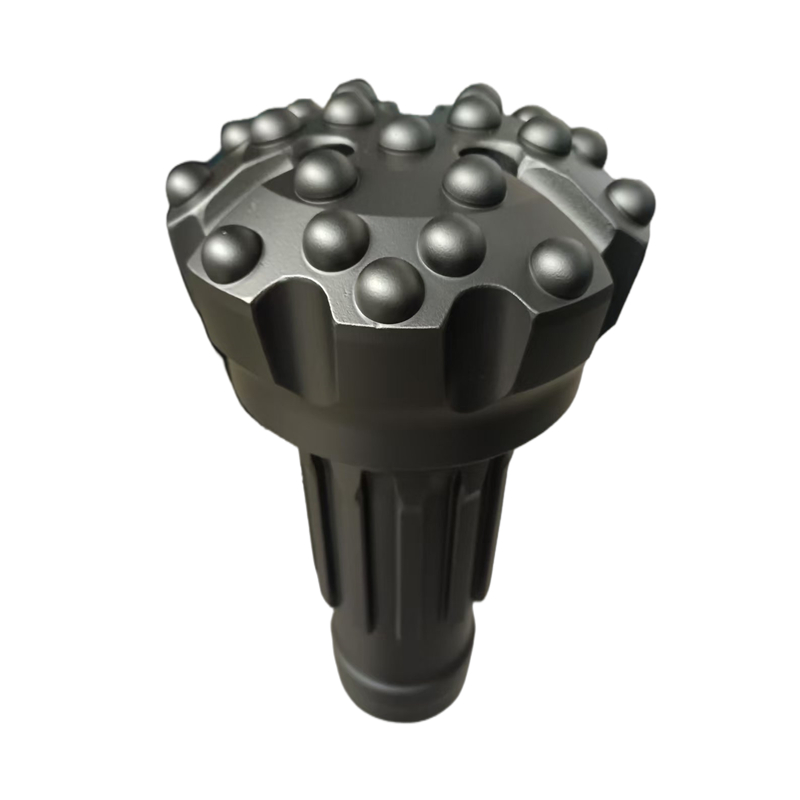
| 3 | 钻头 | DTH drill bit | DHD340-130mm | 1 | pcs |
| 4 | 冲击器 | DTH hammer | DHD 340 4" | 1 | pcs |
| 5 | 回转动力头输出轴 | Swivel power head output shaft | 1 | pcs | |
| 6 | 前端扶钎器耐磨套 | Front end support wear sleeve | 1 | pcs | |
| 7 | 杆套 | Rod sleeve | 1 | pcs | |
| 8 | 推进器齿轮(花键轴和从动轮) | Pusher gear (spline shaft and driven wheel) | 1 | set | |
| 9 | 推进马达 | Push motor | 1 | pcs | |
| 10 | 推进器轴承 | Pusher bearing | 1 | set | |
| 11 | 从动轮轴承 | Driven wheel bearing | 1 | set | |
| 12 | 电磁阀插头 | Solenoid valve plug | 1 | pcs | |
| 13 | 动力头密封 | Power head seal | 1 | set | |
| 14 | 顶头截齿 | Top end cutting teeth | 1 | pcs | |
| 15 | 遥控器电池 | Remote control battery | 1 | pcs | |
| 16 | 遥控器充电器 | Remote control charger | 1 | set | |
| 17 | 劈裂机回转耐磨套 | Rotating machine swivel wear sleeve | 1 | pcs | |
| 18 | 劈裂机密封 | Rotating machine seal | 1 | set | |
| 19 | 劈裂机弹簧 | Rotating machine spring | 1 | pcs | |
| 20 | 劈裂机劈块 | Rotating machine chips | 2 | pcs | |
| 21 | 劈裂机楔器 | Rotating machine wedges | 1 | set | |

This is a consumable part for the PD130 and is not included with the standard PD130 Integral Drilling & Splitting Machine. If you wish to purchase it, you will need to order it separately. Please refer to the attached PDF for specific model specifications and photos of PD130.
PIs fill into the form below and we will contact you immediately